May 4, 2025
Yesterday, I had the privilege of attending a “Meet the Artist” event at the Memorial Art Gallery, featuring renowned multimedia artist, Sanford Biggers. Known for his arresting bronze sculptures, like “Oracle” (on display at the entrance of the MAG), Biggers’ other works explore the intersection between history, time, and cultural phenomena, blending Buddhist, Japanese, African, and American influences into his “conceptual patchworking.”
A gifted multimedia artist, Grammy award-winning Musician, and eloquent story teller, Biggers walked us through his process of creation, noting that it takes time—decades, even—to develop one’s “master stroke.” A provocative piece isn’t a showcase of an artist’s range of complex technical skills; a masterful work of art really only uses a singular cultivated technique or trick that takes years to discover. When that “master stroke” is confidently applied, the viewer can sense it.
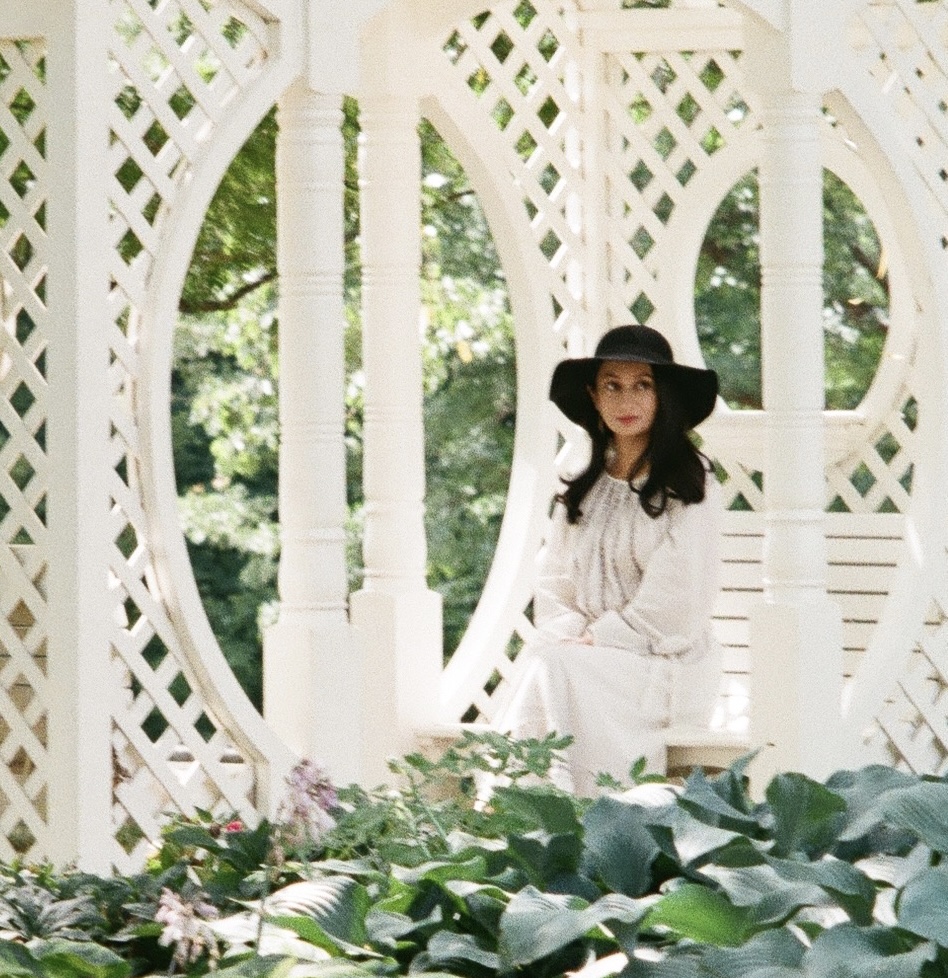
One of Biggers’ exhibits is centered on the theme of “code-switching,” which we all consciously, or subconsciously, practice. As a first-generation American woman born to immigrant parents, I am keenly aware of my tendency to code-switch, as I adjust my behavior and mannerisms to fit into certain social contexts. The lived experiences I “activate”—the South Asian-American woman, the academic, the low-income upbringing, the older sister/elder daughter, the caretaker, the creative—are situationally employed. With many layered identities, it is curious to observe how we still tend to pigeon hole ourselves when faced with external pressures. Biggers’ transpositions of traditions and narratives within his artistic framework, his ideas of “Chimeras”—revisionist marble sculptures combining Greco-Roman bodies with African masks—disrupt typology and dare us to challenge form, truth, and collective imagination. He implores us to craft our own version of authenticity, free from temporal constraints and social conventions.
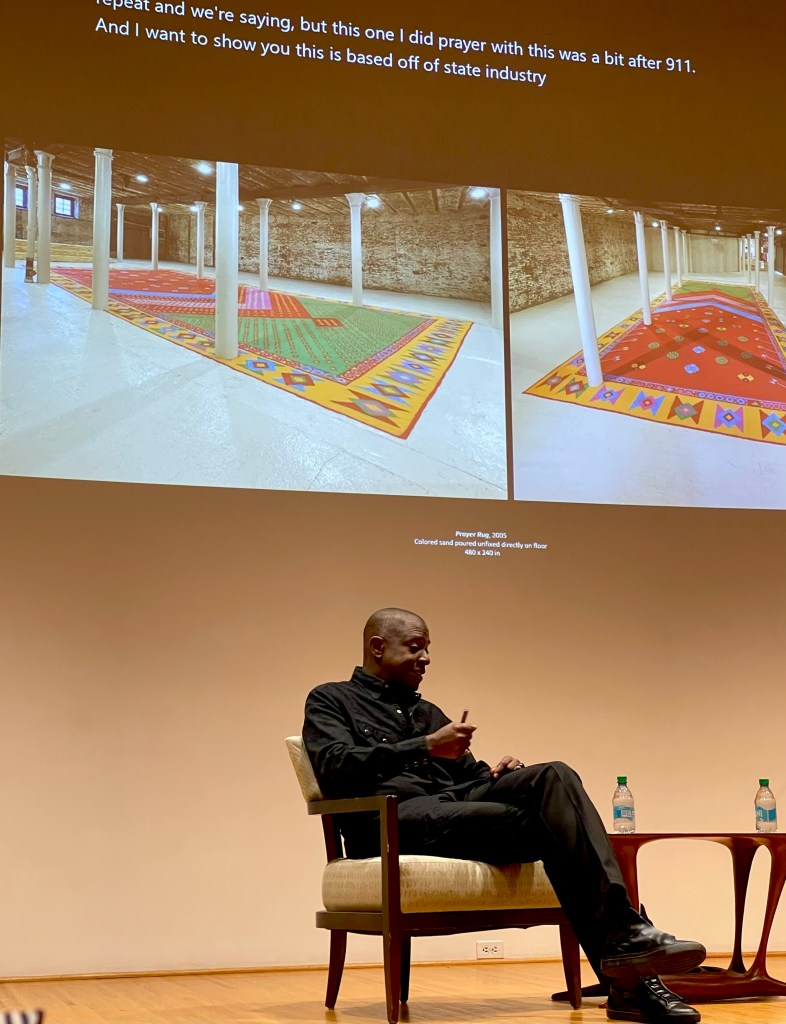
I enjoyed seeing the breadth of color, design, and ingenuity in Biggers’ “Prayer Rug” (below). In the wake of post 9/11 fervor, Biggers, using Afghan motfis and patterns, created this piece with his team by pouring sand directly on the floor (unfixed). It was not lost on us that one bad sneeze would have offset this entire endeavor. One can see that the sand was carefully poured around the pillars, making use of the room as players in the artwork, and the rug is somewhat angled. Is this to reflect how prayer rugs are directed to face Mecca?
In all his works, it is evident that Biggers approaches each component of his work with intention, whether it’s commentary, homage, or subversion of the familiar. He certainly convinced me to challenge truth, and to embrace the breadth of my life experiences when conceptualizing what I want to leave behind for the eyes of strangers.
 Rohma Khan Fine Art
Leave a comment